

We Make a Home: A Building Summary
#8: Money, Time & Surprise
We Make A Home is a newsletter series about Emilio & I’s journey to build a home together (literally & figuratively)! We both value creativity and time in the natural world, and are working to create a place that reflects that. While I write from our direct experience in a way that I hope is helpful, please note that every place and situation will be a little bit different, and we’ll also choose to maintain our privacy in some areas.
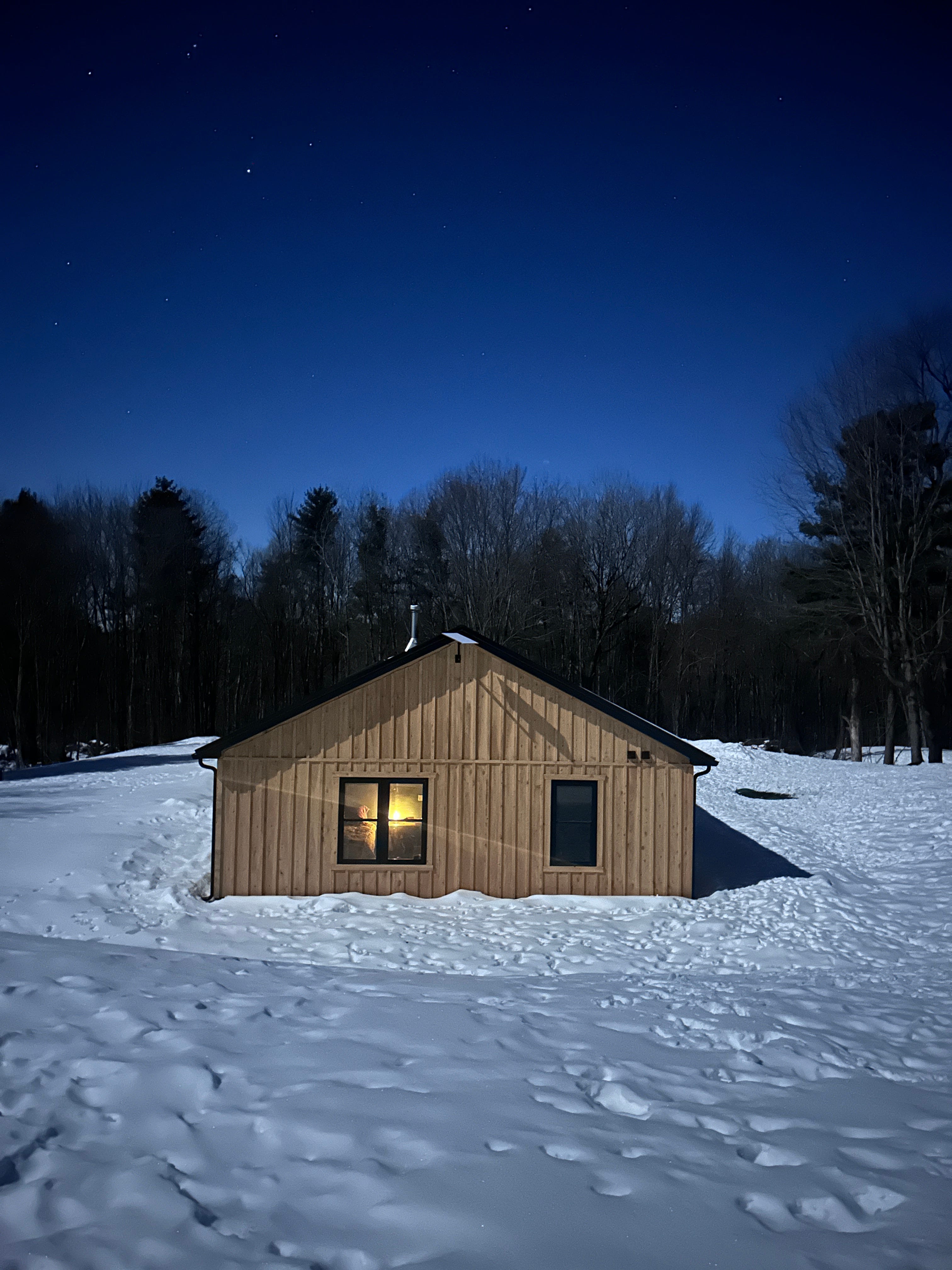
Well, folks, we built a house! It is a beautiful, functional space, and we are so, so lucky that we were able to pull this off, and now we get to live here. We are still processing that this is our home.
I will also say, though many people told us we did this faster and more smoothly than anyone else they know, it was extremely hard. It was probably the most taxing project that we’ve ever taken on, and that’s because it was very high stakes! It was a massive financial investment for us, and it consumed our lives for more than a year. Of course, we think it was worth it, but I don’t want to sugar coat that it took a toll on us. We’re still recovering.
Timeline
One of the most stressful parts of the process was the time pressure.
When we met with our contractors at the beginning of the project, they told us that the estimated time to complete the house, from the day they broke ground, would be 2 months. This is extremely fast relative to the industry, so we had a little bit of trouble believing it. But, once they started working, they really were working that fast. So, we started to believe that 2-3 months really was going to be the move in timeline.
But, as you know if you’ve been reading this series, our project was delayed over 2 months while we waited for connection from the electric company. So, that was not our contractor’s fault or jurisdiction, but they also didn’t account for it in their timeline, even though I came to realize that they knew it was likely to happen.
So, do I think they could have built the whole house in 2 months if there were no third party delays? Yes. But, did they know there would be third party delays and fail to account for them or tell us about them? Also, yes.
It would have been really nice to have different expectations upfront. We had pressure on our timeline because we needed to get out of the place we were living as soon as possible (it had severe environmental mold problems!) and because there is financial pressure for the build to move quickly. The bank charges you interest each month during the build that increases the further the project progresses. So, in those late-stage months when we were stalled for electricity, we were paying a hefty interest payment in addition to our rent.
Our Timeline
May-December 2024: Try to Buy a House
January-April 2025: Try to Buy Land
Late April: Purchase Land
May-September: Battle with the Bank
Mid-September: Broke Ground
October 1: Driveway Complete
October 9: Concrete Pad Poured
October 15: Framing Complete
October 24: Exterior, Well, Septic Complete
November 7: Insulation & Drywall Complete
December 20: Painting & Tiling Complete
[Fixtures, Cabinetry, Counters, Appliances installed in this range]
January 14, 2026: Electricity Turned On
January 22: Plumbing Complete
January 24: Baseboards Installed
January 26: Floors sealed
In all, the process took about 5 months, which is still relatively fast, but it was hard to constantly have to push out our expectations of a move date. There were lots of little moments where we received “bad” news that something was going to take longer, or be more expensive, or need additional review. Over time, getting frequent memos like that had a cumulative toll. Over this span, we also commuted back and forth between the build and where we lived (a 40 minute drive each way) at least 100 times, ran a lot of house-related errands, and spent much of our time researching. It was all-consuming on top of our normal responsibilities.
If you can build a house without a pressing timeline, it would save you a lot of fretting and/or disappointment.
Costs
The other main stressor of this project was, of course, the financial investment. Frankly, we were unprepared for the amount of money we would have to spend out of pocket and were lucky that we had a good year financially in other ways! While this is a little unusual since we were in charge of and separately purchased things like paint and tile, I would recommend expecting to spend 15% of the cost to build out of pocket. Note that this chart is not including the cost of the land or the construction loan itself.
Out Of Pocket Costs
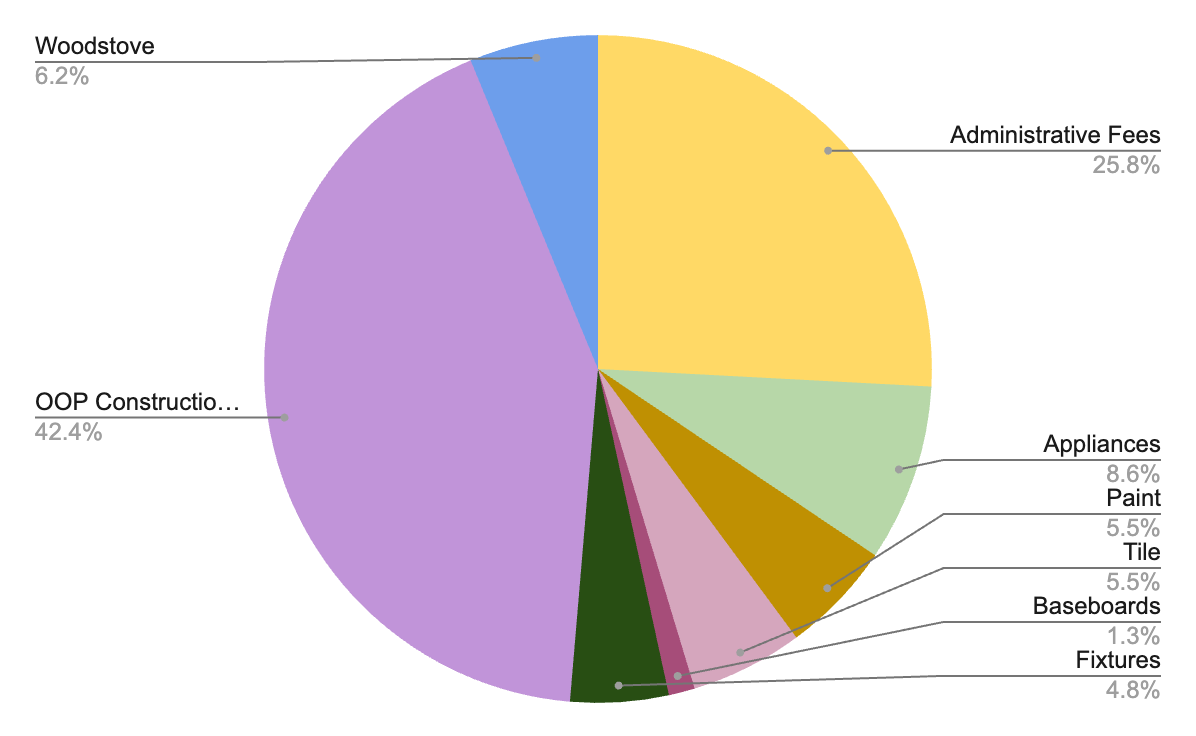
Like I mentioned in earlier posts, there were a lot of costs (that I call Administrative Fees here) that added up and that we had no idea to expect. While we were able to budget for certain amounts we knew we’d be paying at closing, it was definitely more than we anticipated.
The other largest OOP cost were construction costs in addition to the original contract that we got our loan for. The first was for the driveway. The builders estimated our driveway would be 500 feet, but when it was said and done, it was actually 600, and they charged us for the materials and labor needed to extend it. This was completely unexpected—to be honest, we assumed they had measured the driveway and would have informed us instead of charging us in the aftermath.
The second was less of a surprise—we knew that they hadn’t included the cost of the water boiler that runs our in-floor heating system in their original quote. This was because they thought they would make up the cost of it in other areas; they didn’t (more on that below). So, we also paid for that out of pocket.
The costs of appliances, tile, and baseboards all met our expectations. Paint was more expensive than I thought it would be. There were places where we could have saved money (I once bought two gallons of the wrong color; we decided to repaint one room; there were some tools we couldn’t reuse because we didn’t have running water to clean them). But, it was still an investment to buy four coats of paint for every room, and man, did we go to the paint store a lot of times
The cost of fixtures also added up—lights, faucets, hardware, etc. There were a lot of little bits and bobs for us to purchase. And, finally, the wood stove was expensive to install (though affordable to purchase!). In some ways, including this in our home was a little bit of a splurge; but we also wanted a way to heat our house if the power goes out, so in other ways, it’s a necessity because we don’t have a generator.
We were also totally unaware of how difficult it would be to find someone to install it, and then how expensive it was on top of that. Our contractors were able to connect us with an installer, but it was still quite difficult to get the job scheduled and completed. Some installers quoted $8-10K for the installation (thankfully we did not pay anywhere close to that much!). We also had no idea upfront that it would be so difficult or expensive; had we known, we might have pivoted, but I’m so glad we have it!


Choices
Why did we decide to build a house in the first place? The short answer is that we couldn’t find a house for sale that would suit us. The longer answer is that we had one major non-negotiable (privacy & quiet) that eliminated lots of candidates. Houses being in major disrepair and/or budget eliminated most others.
Privacy ended up probably being the most expensive element of our build. We chose our land because it was set on a quiet road (yay!), was beautiful, and would allow us to build a long driveway that nestled our house into the forest. We don’t regret this at all!
But, if we had chosen to place the house closer to the road, for example, we might have been able to reduce the cost of our build (and thus the amount of our loan) by somewhere in the neighborhood of $30K. But, privacy really was our one non-negotiable, and so we invested in it. This also, in my opinion, significantly increases the value of our home.
This land also required a more expensive septic system. I mentioned that we waived our pre-purchase perc test because we knew we would be able to make a system work, and we loved this land. But, if we had done the test at that time (even though we would have had to pay for another one later) it would have told us that we were going to have to install a more expensive system. At that point, we could have decided if it was worth purchasing the land or if we should have kept looking—I’m obviously very glad that we bought this land, but it was another choice that affected the cost.
Building a rural house means also investing in the infrastructure around it. The cost of the house, without the septic/well/driveway, was about $185 per square foot. If you include those things, it’s closer to $250 per square foot.
Design
The other main challenge of building a house was more exciting and less stressful: designing it! I am no interior designer, but I had a lot of vision that (mostly) worked out. We tried to make sure nothing on the interior was a splurge.
The shiplap wall and ceiling were relatively the same cost as drywall for our main room. Our windows are great quality, but not wood-finish or overly fancy. Our counters are quartz and beautiful. Our cabinets are maple and stunning. We kept our concrete floors. We were guided by the hope of buying things high-quality enough to avoid problems while still sticking to our budget.
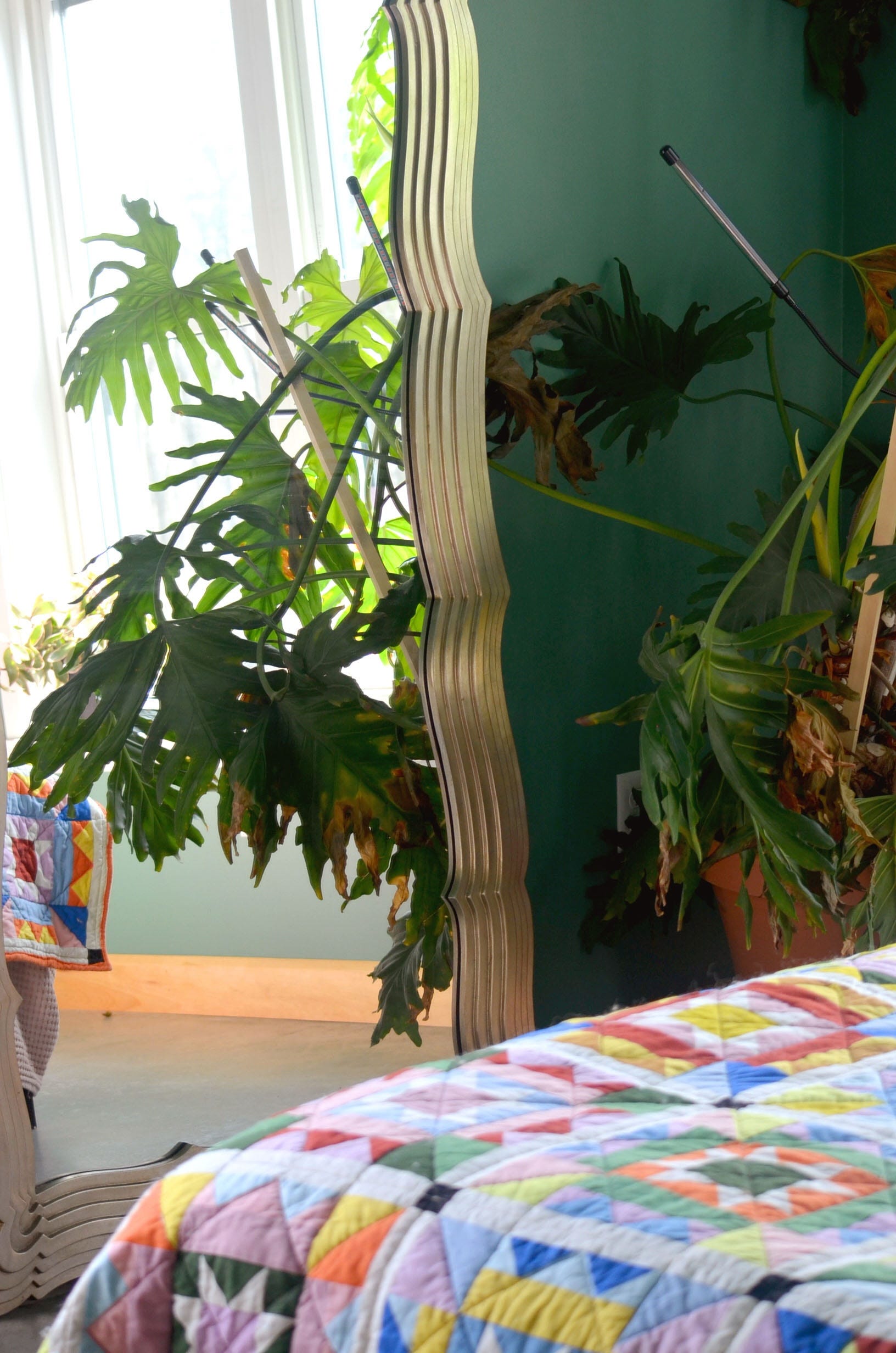
We found little ways to make a big impact: playful knobs on our cabinetry, beautiful pendant lights above our kitchen island, second-hand wooden mirrors.


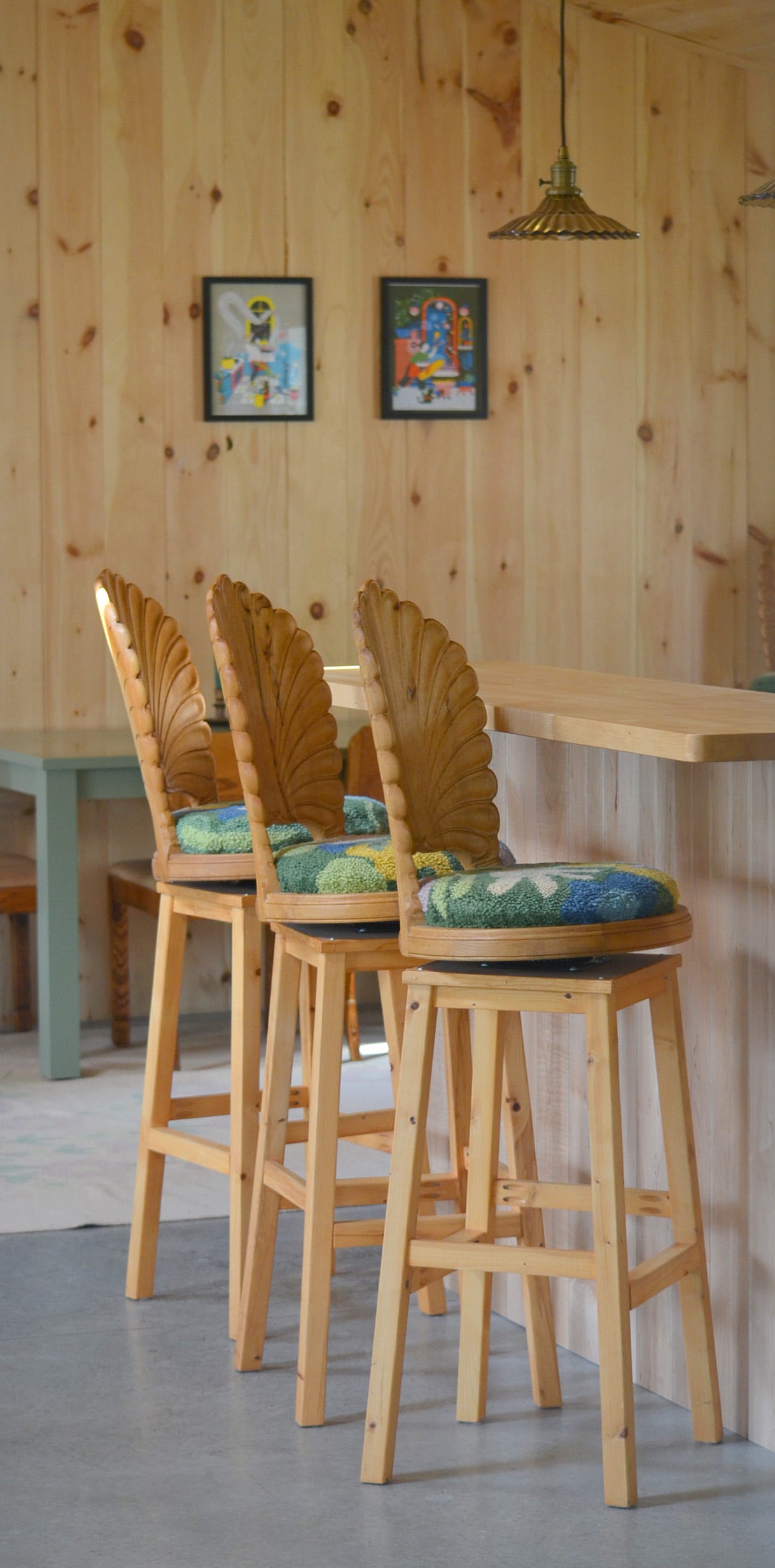
We also made the most of small choices we could make since we were starting from nothing: for example, an island perfectly sized to fit the custom stools we built a few years ago and a filtered water spout that works fast (our old fridge water spout trickled!).
One thing I lamented in building a new place instead of buying one was the loss of potential design character in an old house. So, we thought about where we could add character here:
We painted both bedroom ceilings to match the walls. I think it makes the rooms feel cozier and elevated.
We added paneling to both bathrooms to avoid having bare drywall everywhere—to me, only drywall on every wall and ceiling is the most boring risk of a new build.
We used real wood for the baseboards, which will nicely complement the contrast-color trim and door paint (when we finish it), in my mind, merging cabin & farmhouse feelings.
Our other most important design principle is patience (famously my achilles heel). We have so many plans for this place! We will just have to keep dreaming things into existence one piece at a time.
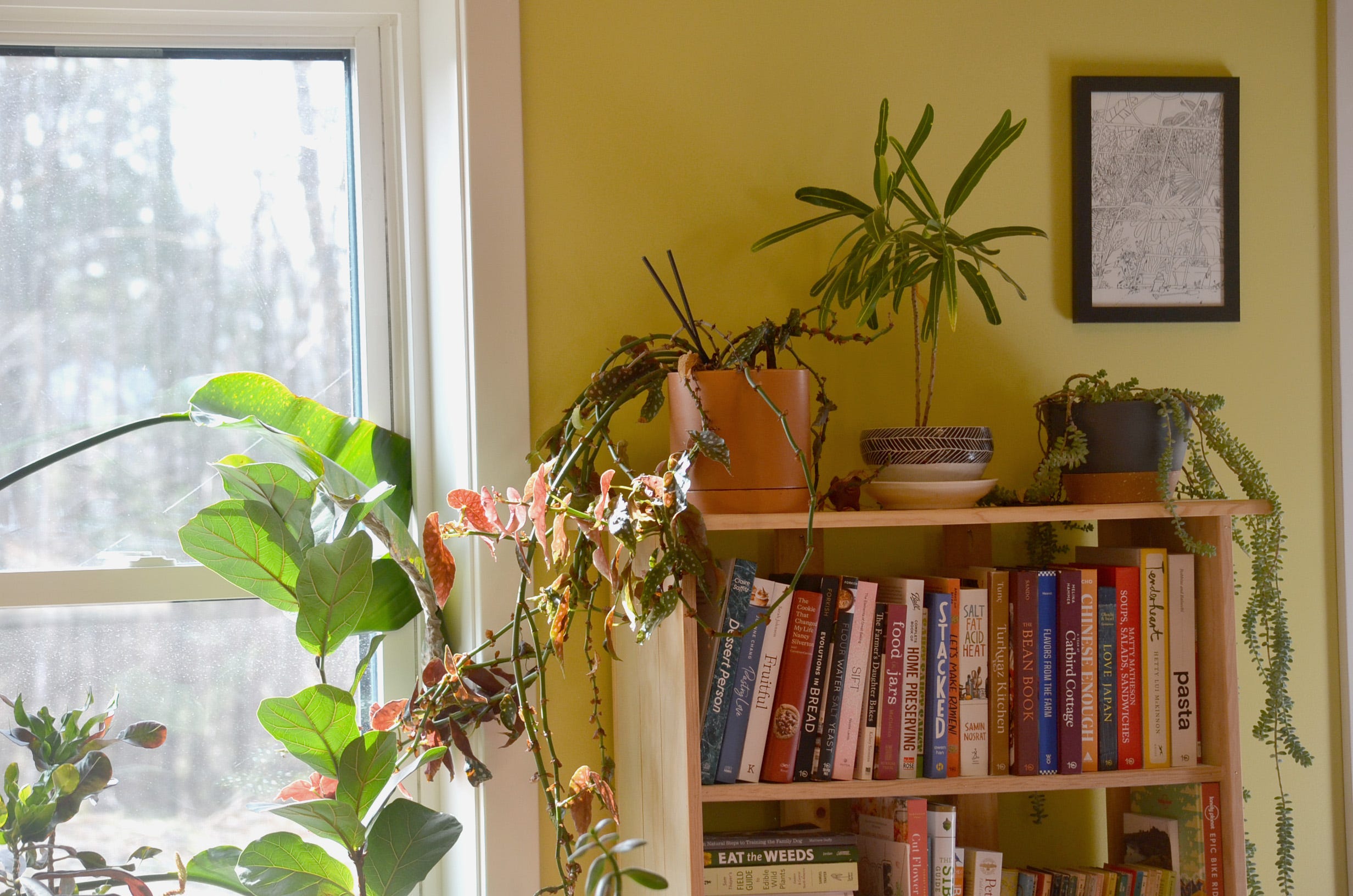
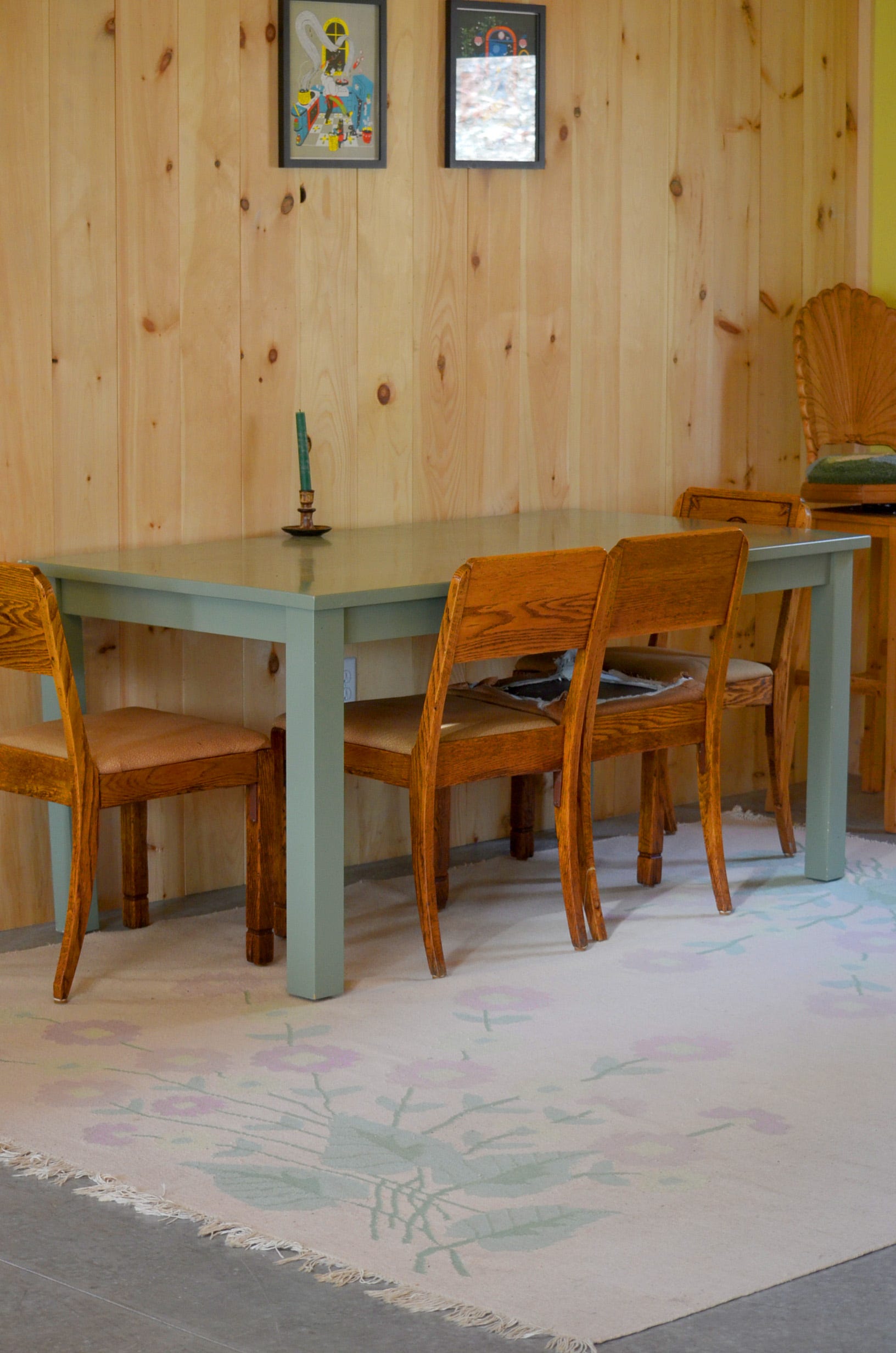
My best advice: buy the right thing even if it isn’t the right time. I am so glad I bought the vintage Marimekko rug I found on FB last year—it didn’t fit in our old house very well, but it is positively dreamy in this new space.
Have questions? We’d love to share more.
Next Time on We Make a Home…
We’ve got one more BIG surprise up our sleeves! Stay tuned!
Love this summary! Can’t wait for the surprise 🤩. Y’all are truly amazing!!
We couldn’t be more happy. Even through all the stressful moments the two of you were an amazing team, making the right decisions for you. So proud of this next chapter for you. 🏡